We do the math. You just eat.
Eat better.
Spend less.
Our recipes cost less than half what the average American spends on food. That’s ~$2,000 a year less per person.


Plan.
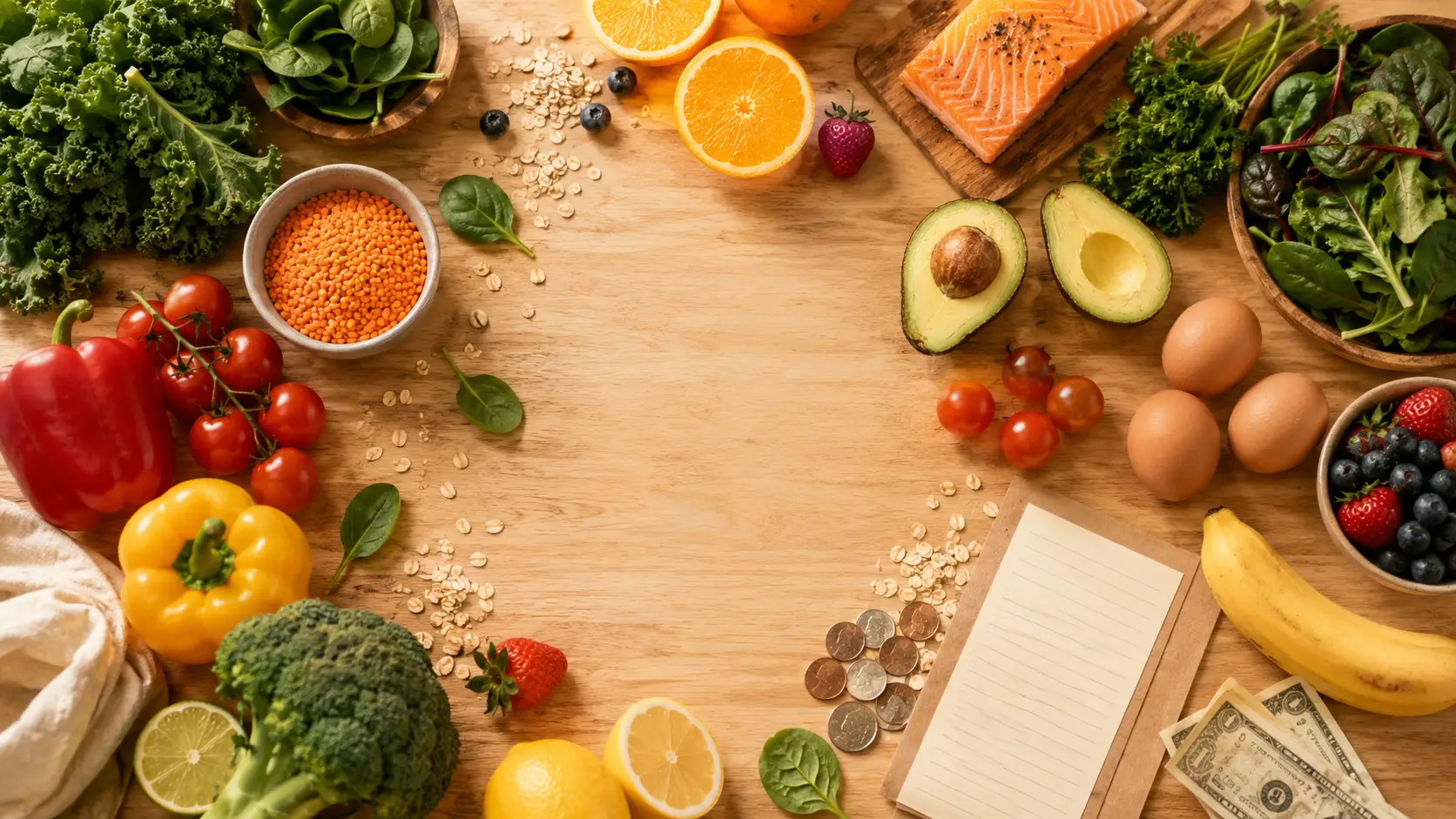
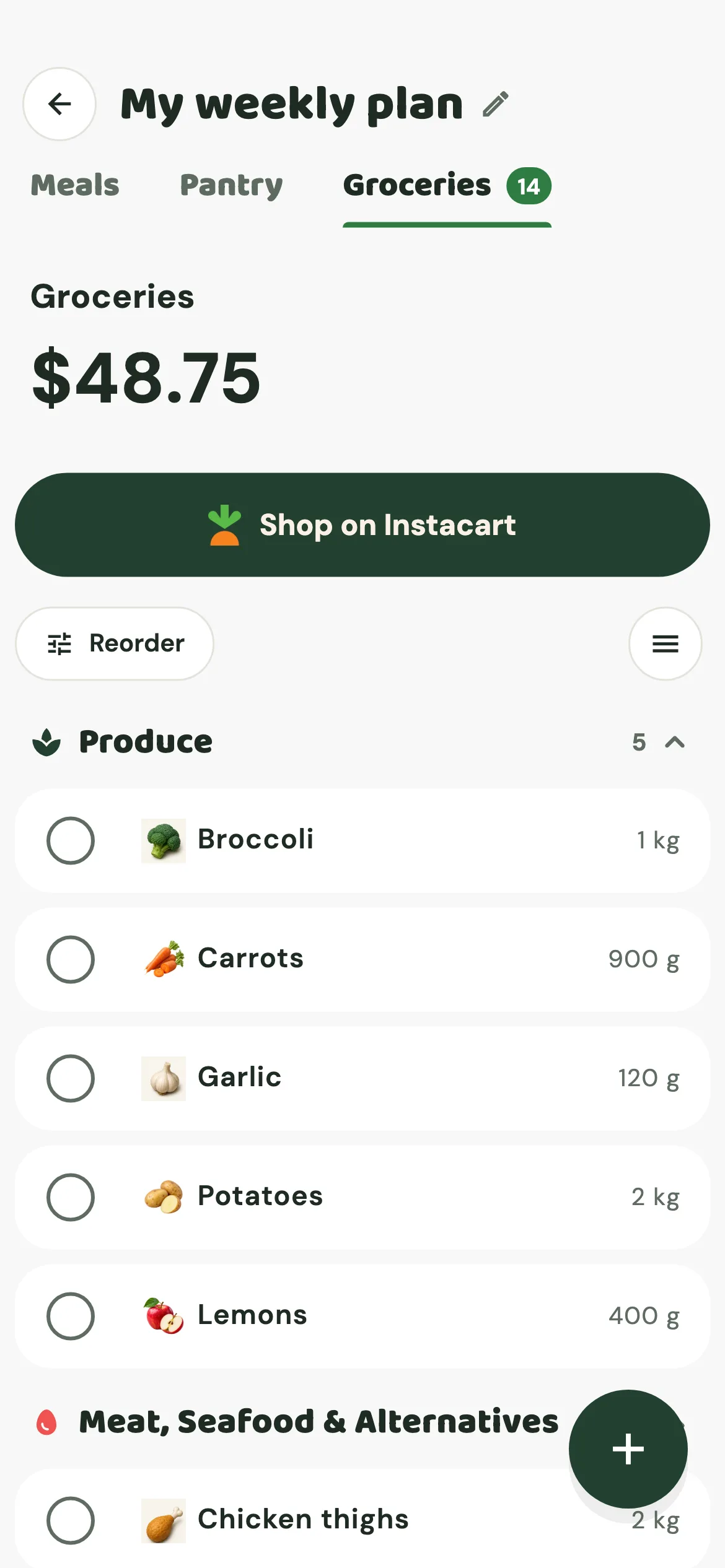
Plan your meals and build your grocery list from home, optimized for cost and nutrition.
Shop.
Hit the store with a list already optimized for the cheapest healthy options near you.
Compare.
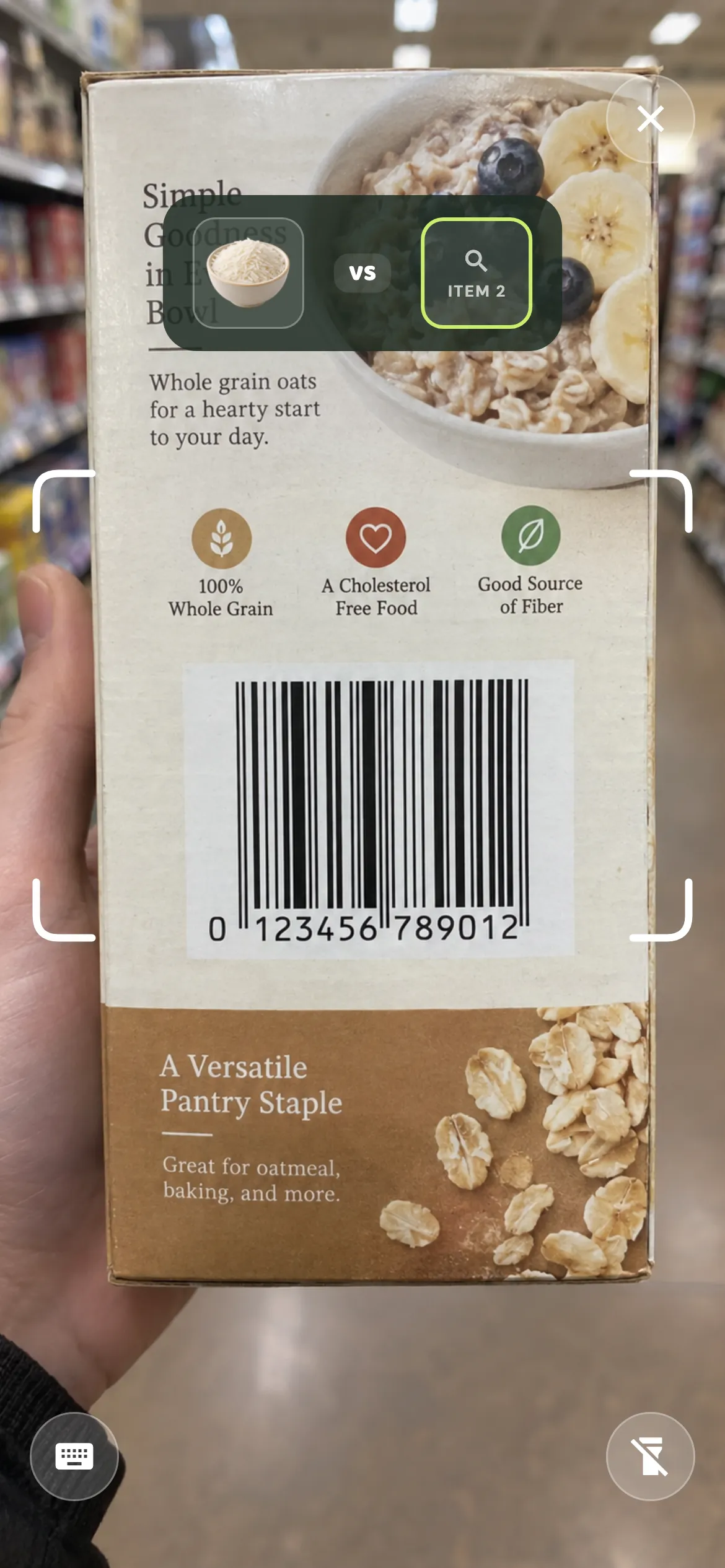
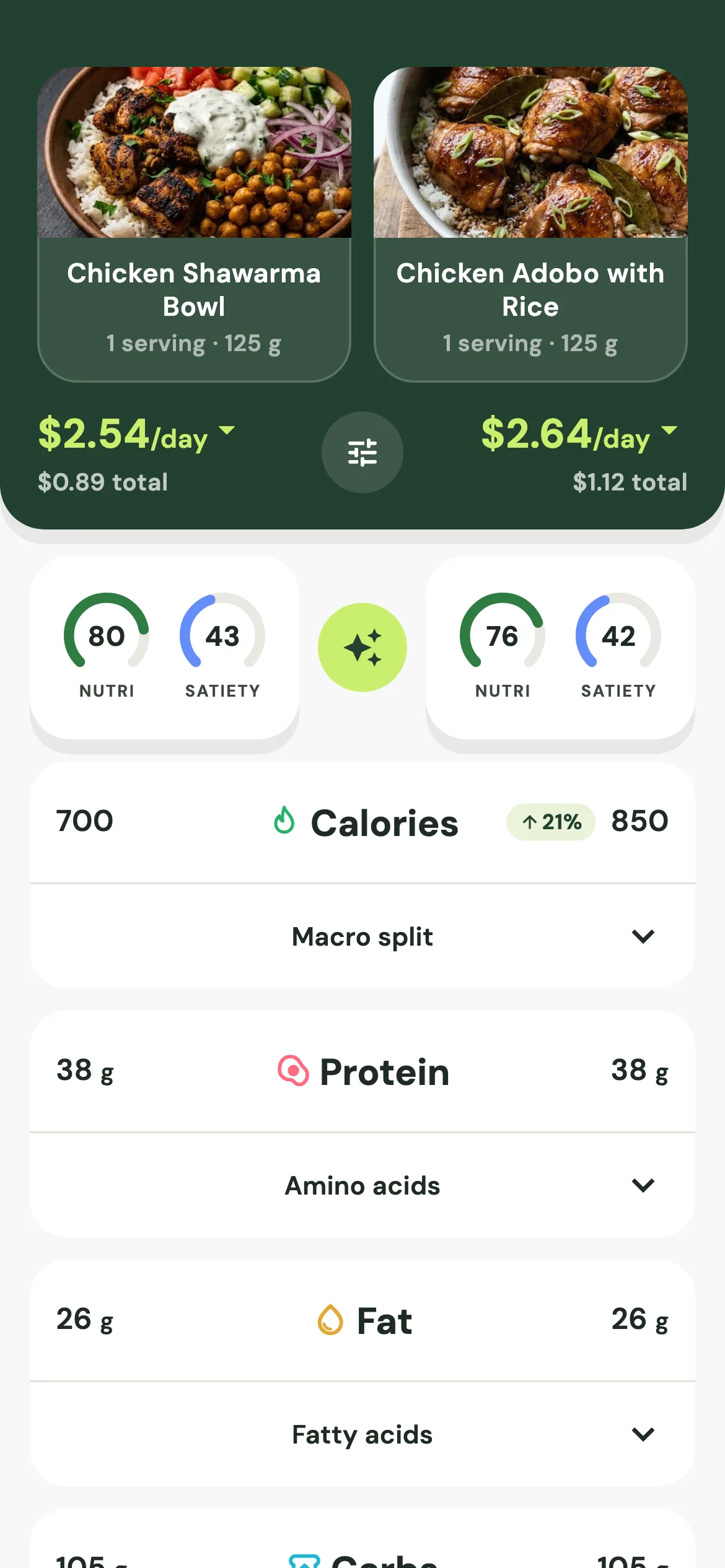
See exactly which foods give you more nutrition and satiety per dollar.
Enjoy.
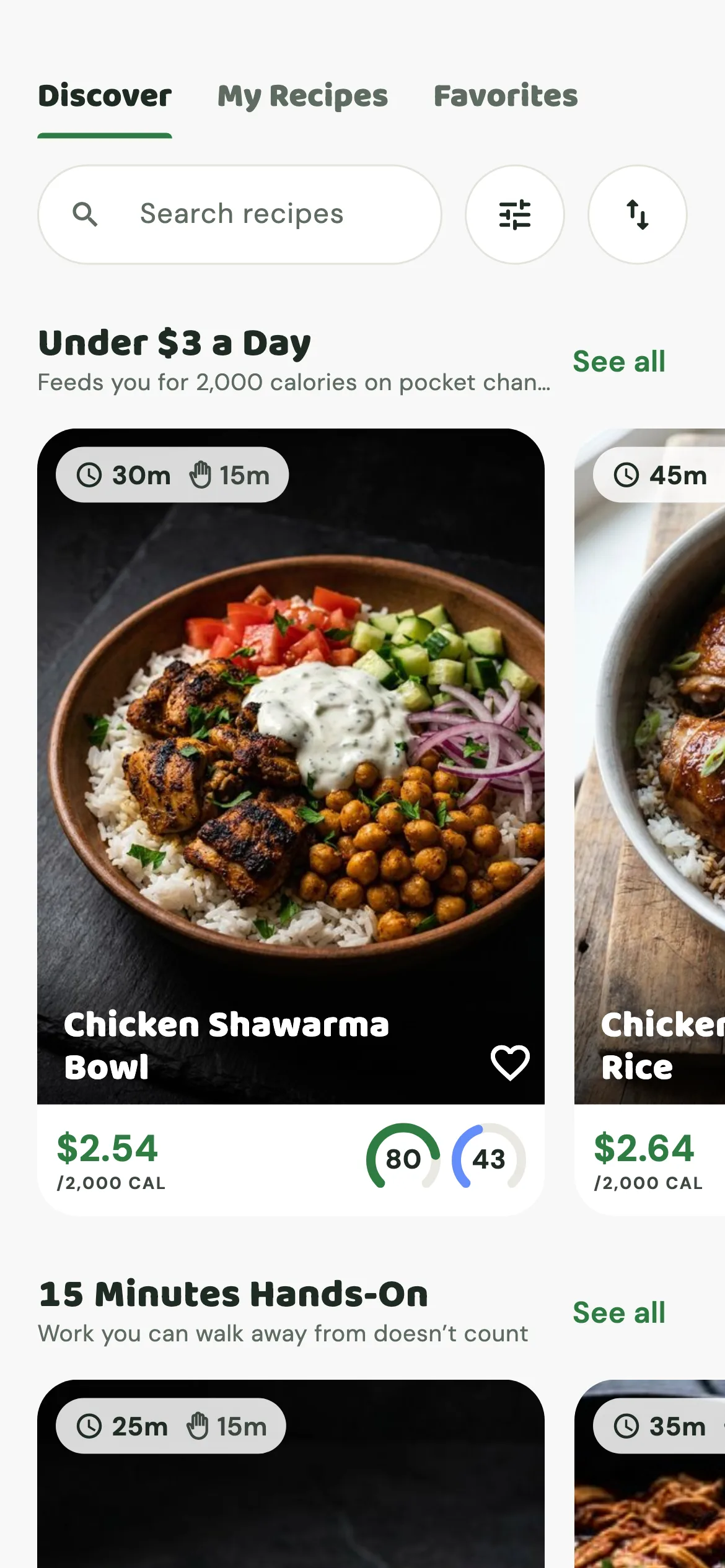
Cook food you actually love, with the real cost and nutrition worked out before you start.
How much could you save?
Set your household, then drag the curve to the food you actually eat.
Estimated yearly savings
$4,199
$350 per month
Average American
$7,849
Your plan
$3,650
Drag the curve, or focus it and use the arrow keys
$5.00/2,000 cal
How we calculate this
Every figure assumes 2,000 calories per person per day, and compares what that food costs.
The average American spends about $10.77 per 2,000 calories on food, groceries and eating out combined. That is average yearly food spending per person (US Bureau of Labor Statistics, Consumer Expenditure Survey 2024) divided by average calorie intake (NHANES/WWEIA 2017-18).
Frugalicious recipes averaged $5.15 per 2,000 calories across all 295 priced recipes in our catalog on 15 September 2026. The calculator starts at $5.00.
It is an estimate that compares ingredient costs with average total food spending, not a measurement of your own spending or a promise of what you'll save. Prices are US prices.
Three numbers on every food.
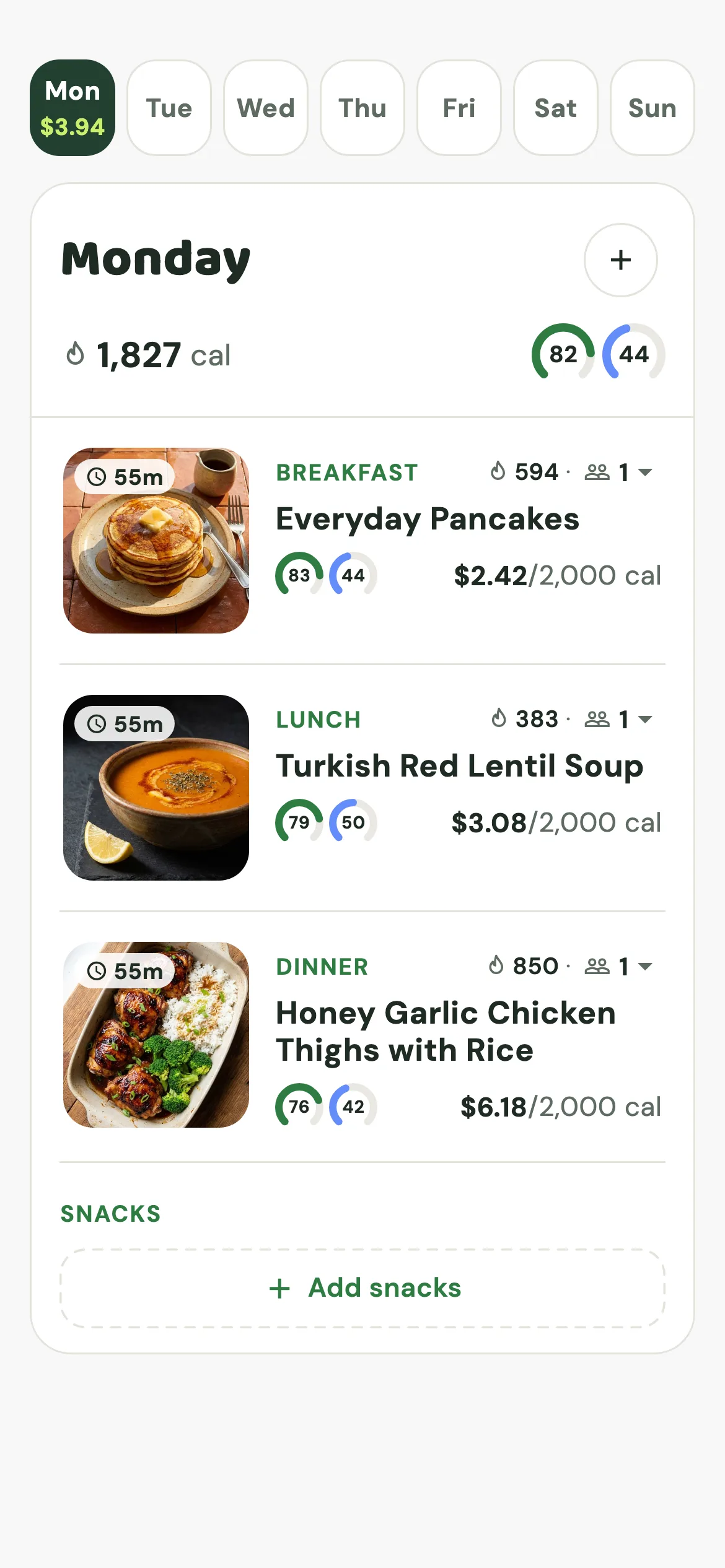
The diet happens in the cart, not on the plate. So Frugalicious scores food before checkout: every recipe and grocery item gets the same three numbers.
 ◷ 55m
◷ 55m Turkish Red Lentil Soup
-
Nutrition score
Nutritional quality per calorie. Fiber, protein, healthy fats, and vitamins and minerals raise it; sodium, sugar, and saturated fat bring it down.
-
Satiety score
How filling a food is likely to be per calorie, estimated from its protein, its fiber, and how much food you get for the calories.
-
Cost per 2,000 calories
What a full day of eating this food would cost. A $1 snack and a $6 dinner land on the same scale, whatever the portion or pack size.
Frugalicious scores are our own estimates and are still in beta. They're a guide for comparing food, not medical or dietary advice.
A note from the founders
We built Frugalicious because we couldn't find an app that combined nutrition science with real grocery prices. Recipe apps ignored budgets. Finance apps ignored food.
The opportunity is the intersection of cheap, healthy, and genuinely filling food. We want to put that data in your hands and prove eating well should not be a luxury.
Questions, answered.
When can I get Frugalicious?
Very soon. We're launching on iPhone and Android shortly. Join the waitlist and we'll email you the day it's out.
How much does it cost?
Frugalicious is free to download and use. Frugalicious Premium adds AI features such as receipt scanning, recipe import and AI meal plans. You'll see the price, and any free trial, in the app before you subscribe.
Is this a diet app?
No. There are no forbidden foods or meal rules. Frugalicious shows what food costs, how nourishing it is and how filling it is likely to be, so you can choose. Any food can fit.
Where do the prices come from?
Listings from major US grocery retailers, prices shared by the Frugalicious community, and prices you've paid yourself. When we price a whole grocery list at a store, the total is shown as an estimate.
Is it only for the US?
For now, prices and cost figures are based on US data, so they're most accurate in the US.
Anything else? Email support@frugalicious.app.
Know what dinner costs before you buy it.
Join early and help shape a grocery app built around nutrition, satiety, and real prices.
Coming soon to iPhone and Android